Seeing More When It Matters
When a tooth hurts or a treatment decision feels uncertain, families deserve a clear explanation of what the dentist sees and why care may be recommended. For patients in Haledon, Caldwell, and nearby New Jersey communities, a closer look can make a conversation about next steps easier to follow.
Three-dimensional imaging, often called cone-beam computed tomography (CBCT), can show teeth, bone, and nearby structures from several angles. A dentist may consider it when standard dental images do not provide enough detail to answer a specific clinical question. The FDA’s guidance on dental CBCT stresses that the scan should be used only when the added information is needed, not as a routine exam for everyone.
Belmont Dental Associates’ 3D imaging gives the dental team another way to assess a concern and explain findings. Whether a scan is appropriate depends on the patient and the question at hand. You can ask what the image is meant to clarify, and how its findings may affect your care.
What Three-Dimensional Imaging Shows
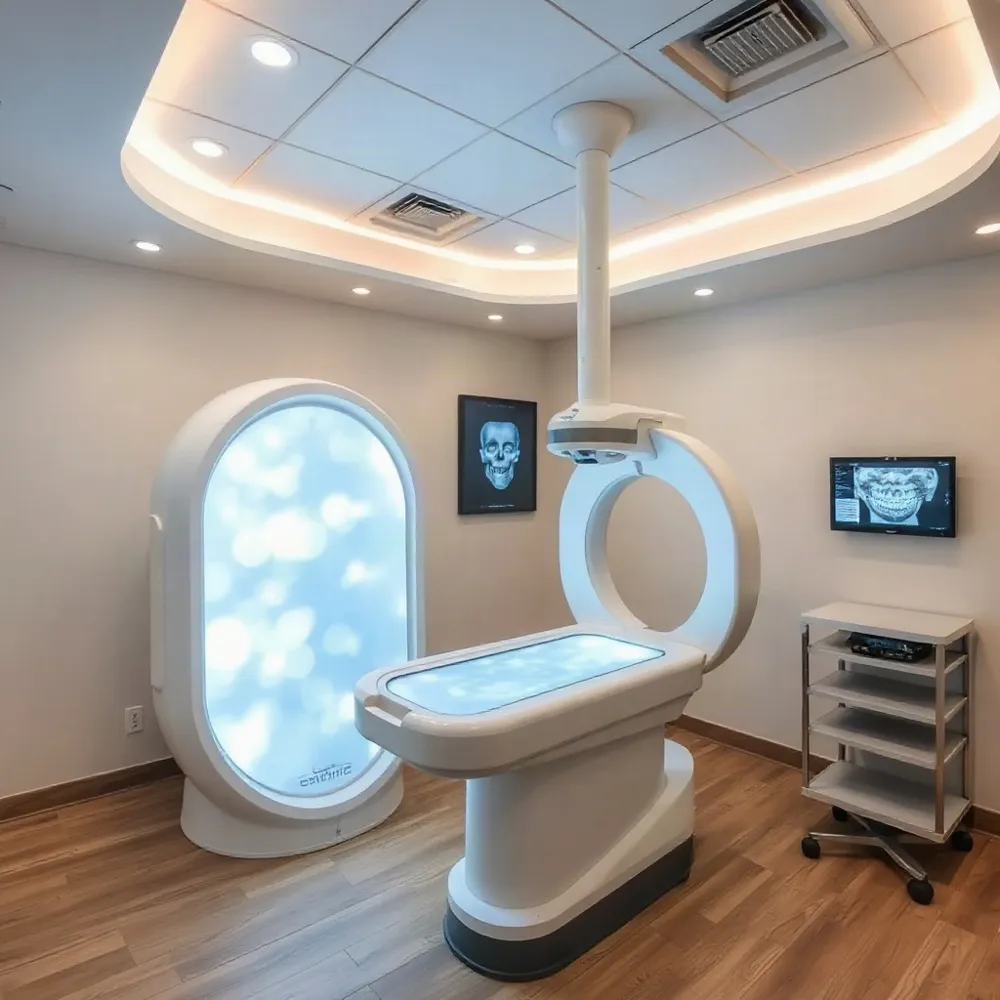
Three-dimensional imaging, sometimes called CBCT, uses X-rays to create a detailed picture of your teeth, jaw, and nearby structures. Regular dental X-rays give a flat view, but 3D imaging lets your dentist see things from different angles for a clearer understanding. The RadiologyInfo guide to dental cone beam CT explains when this technology is especially helpful.
This extra detail can help your dentist check on an impacted tooth, look at your jaw or sinuses, or investigate a concern that wasn’t clear from a regular exam. It can also help plan treatments like implants or extractions by showing exactly where your teeth and other structures are. These are general uses of the technology, not a list of procedures that Belmont Dental Associates performs with 3D imaging.
You won’t need a scan at every checkup. Your dentist will only recommend it if there’s a specific question that the extra detail can help answer. The FDA’s guidance on dental CBCT advises using the scan only when it’s truly needed, because it uses a bit more radiation than a regular X-ray. Your dentist will always weigh the benefits against any risks.
Belmont Dental Associates offers 3-D dental imaging as part of our same-day technology, so you can get the information your dentist needs quickly. If you’re nervous about dental care, Belmont Dental Associates offers sedation options to help you feel at ease. Our in-house Belmont Dental Plan may offer savings; ask the office about benefits and eligibility.
If you are bringing a child or have concerns about imaging, ask why a scan is being recommended, whether another option would work, and how the images will guide the next step.
A Scan Tailored to Your Needs
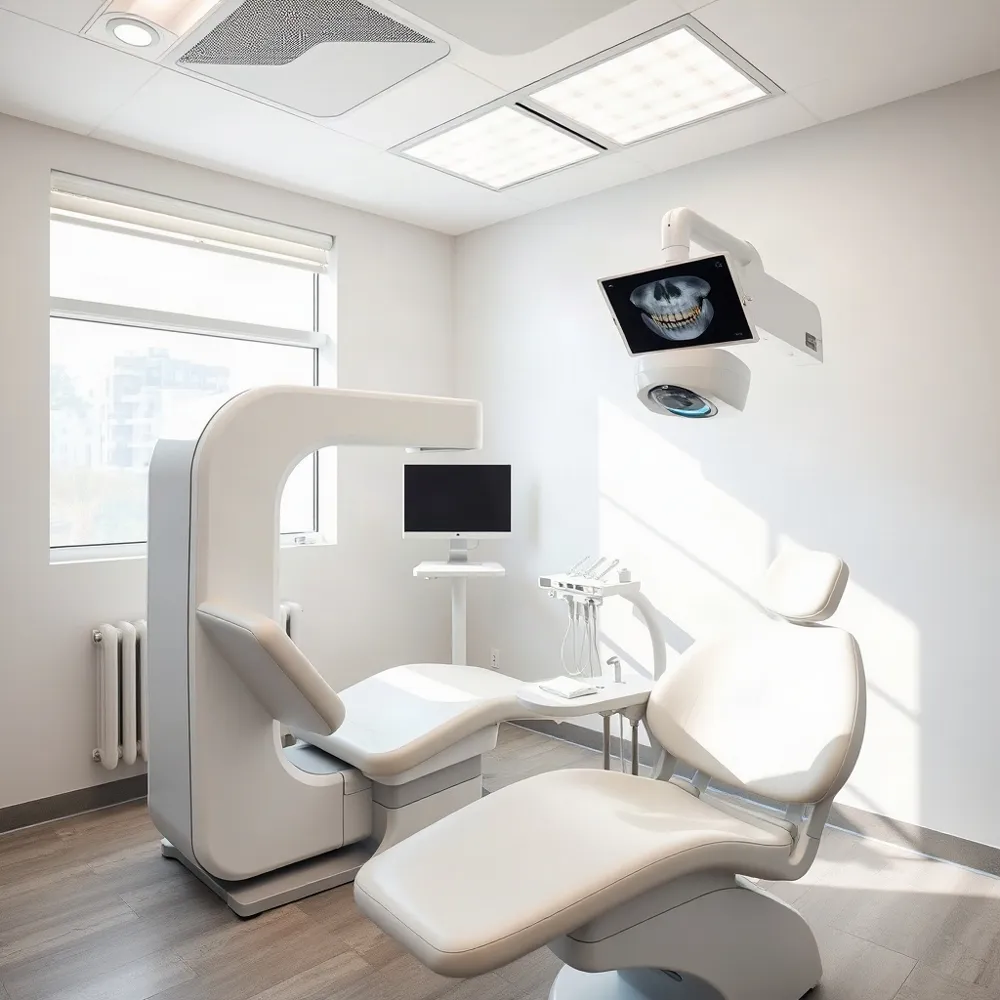
A CBCT scan is a brief, noninvasive exam. The scanner rotates around your head and captures images from different angles, which are combined into a three-dimensional view. You will be asked to stay still while it operates. The scan itself is painless, and you can return to your usual activities afterward.
The time depends on the area being imaged: a full-mouth scan typically takes about 20 to 40 seconds, while a focused scan of the upper or lower jaw generally takes less than 10 seconds, according to RadiologyInfo.org. Your dental team can explain what to expect and why a particular area needs imaging.
Is 3D dental imaging safe, and how much radiation does it involve?
CBCT uses X-rays, so it involves ionizing radiation. Exposure varies with the equipment, settings, and area scanned, and there is no single dose that applies to every exam. CBCT generally involves more radiation than a conventional dental X-ray, though less than conventional medical CT.
The FDA’s guidance on dental CBCT recommends using it only when needed to obtain clinical information that other imaging cannot provide. The scan area and exposure settings should be tailored to the patient and the question, using the lowest dose that still provides images suitable for diagnosis.
Children are more sensitive to radiation, so a scan for a child should be clinically justified and appropriately tailored. Tell your dental team if you are pregnant or might be pregnant, and discuss the benefits, risks, and possible alternatives before the exam.
It is reasonable to ask what the scan is meant to clarify, whether another imaging option could answer the question, and how the findings may affect your care. At Belmont Dental Associates, the team can explain the purpose of 3D imaging before taking images, helping families make informed decisions without treating every visit as a reason for a scan.
Understanding the Cost Before a Scan
How much does 3D dental imaging cost, and might insurance cover it? There is no single price for every patient. The cost can vary with the type of scan, the area being imaged, and the clinical question the dentist needs to answer. A scan may be recommended when other images do not provide enough information, as the FDA explains.
Insurance coverage depends on your policy, benefits, and whether the imaging is considered necessary for diagnosis or treatment. Before proceeding, ask Belmont Dental Associates for a written or verbal estimate and whether the office can check your applicable benefits. That conversation can help families in Haledon, Caldwell, and nearby New Jersey communities understand possible out-of-pocket costs before scheduling.
If you do not have dental insurance, ask whether the in-house Belmont Dental Plan offers savings on imaging. Plan benefits and eligibility may vary, so confirm the details with the office rather than assuming a scan is included. A clear cost discussion gives you time to plan care and weigh the imaging recommendation against your budget.
How Imaging Fits Belmont Dental Care
For families in Haledon, Caldwell, and nearby New Jersey communities, imaging is one part of a dental visit, not a decision made on its own. At Belmont Dental Associates, Dr. Dominick A. Lembo, DMD, and the dental team consider what a scan shows alongside your examination, symptoms, and care needs. The images can inform a recommendation, but the dentist’s clinical judgment and your questions remain central.
Three-dimensional imaging has a diagnostic role: it gives the dentist a view of oral structures when added detail may help answer a clinical question. It is separate from the practice’s on-site CAD/CAM system, which mills permanent ceramic crowns in a single visit. The crown-making system produces a restoration; it does not take or interpret diagnostic images.
That distinction can help make a treatment conversation clearer, especially when a scan is being considered before a procedure. The FDA guidance on dental cone-beam CT says CBCT is not needed for every examination and should be used when its added information is clinically useful. Your dentist can explain what a proposed scan may clarify and whether another approach could answer the same question.
Belmont’s family-focused setting also matters when a visit feels stressful. The practice welcomes children and adults, offers a kid-friendly environment, and provides sedation options for patients with dental anxiety. If an urgent concern arises, same-day emergency appointments may be available. These care options can support a more comfortable visit, while imaging remains a case-by-case diagnostic choice rather than a promise of a faster appointment or a particular outcome.
Ask What the Image Can Answer
Before agreeing to a scan, ask what question it is meant to answer, what the results could change in your care plan, and what you will pay. Three-dimensional imaging can reveal useful detail in selected situations, but it is not needed for every dental concern. The FDA’s guidance on dental cone-beam CT advises using it when the added information is needed and considering alternatives.
A clear explanation can help you feel more comfortable and understand how imaging fits with an exam and other findings. At Belmont Dental Associates, families can discuss 3D imaging alongside practical care options, including sedation for dental anxiety, same-day emergency appointments, and the in-house Belmont Dental Plan for patients without insurance.
If you live in Haledon, Caldwell, or a nearby New Jersey community, contact Belmont Dental Associates to talk through your imaging questions and comfort needs. You deserve to understand the recommendation before deciding what comes next.